
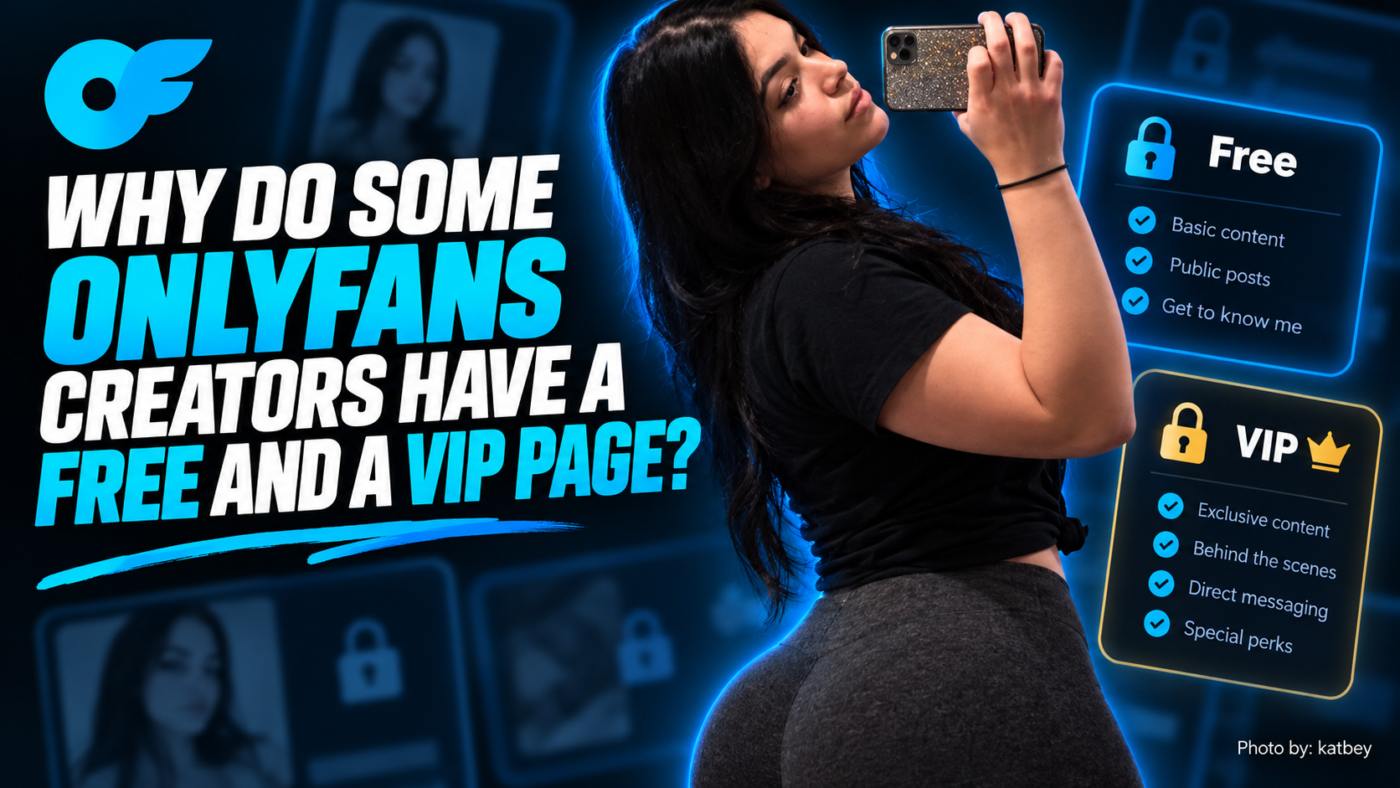
Some creators operate free and VIP OnlyFans pages because the two accounts can serve different purposes.
A free page usually gives new fans a low-friction way to discover the creator. A VIP page, meanwhile, generally requires a paid subscription and may offer a different content package, posting style or subscriber experience.
In creator marketing, this is sometimes called a two-page funnel.
The free page brings people into the creator’s audience. The paid page is then positioned for fans who want a different level of access or content.
Current creator-industry guides describe this structure as a common way to separate broad discovery from a paid subscription experience, although running two pages also means maintaining two audiences and more day-to-day work.
Here is how the setup works and why some creators choose it.
A free OnlyFans page allows fans to follow without paying a recurring subscription fee upfront.
That does not necessarily mean everything on the page costs $0.
A creator may still offer:
BEY’s beginner guide explains the same distinction: a free subscription can coexist with optional paid content, while individual creators decide how their pages are structured.
The easiest way to think about a free page is:
$0 entry → creator discovery → optional engagement → optional purchases
A “VIP page” usually refers to a creator’s paid subscription page.
VIP is often a marketing term chosen by the creator. It helps distinguish the paid account from a free or promotional account.
For example, a creator might describe the pages as:
Free Page
For previews, updates, discovery and optional purchases.
VIP Page
For paying subscribers who want the creator’s premium subscription experience.
The exact benefits vary by creator.
One VIP page might include most content within the monthly subscription. Another may still offer additional PPV.
That is why fans should read the individual page description rather than assuming every VIP account works the same way.
The main difference is usually the entry price and purpose of the page.
| Feature | Free Page | VIP / Paid Page |
|---|---|---|
| Required monthly subscription | Usually $0 | Usually paid |
| Main purpose | Discovery and audience building | Paid subscriber experience |
| Free feed posts | Often | Usually included for subscribers |
| PPV possible | Yes | Can also be offered |
| Tips possible | Yes | Yes |
| Barrier to joining | Lower | Higher |
| Audience size | May attract more casual followers | Usually more purchase-intent focused |
| Creator goal | Introduce and engage | Serve paying subscribers |
Neither structure is automatically better.
They simply solve different problems.
The biggest reason is that the creator may want to separate discovery from paid access.
Imagine someone discovers a creator through TikTok or Instagram.
They may like the creator but hesitate to pay immediately.
A free page gives that person somewhere to go without making an upfront subscription decision.
Later, if they become more interested, the creator may introduce the VIP page.
The journey could look like:
Social Media → Free Page → Engagement → VIP Page → Subscriber
Several 2026 creator-management guides describe this free-to-paid structure as a funnel: the free page captures a broader audience while the paid page serves people willing to subscribe.
Paying for an unfamiliar creator requires a decision.
Following a free page is easier.
That can matter when the fan has only seen:
The fan may not know enough yet to justify a monthly subscription.
A free page gives the creator another opportunity to make an impression.
Social platforms introduce people to creators, but the creator still needs somewhere to send that traffic.
A two-page structure can make the free account part of that discovery process.
For example:
Instagram Reel
↓
Creator Profile
↓
Free OnlyFans Page
↓
Creator Posts and Messaging
↓
VIP Offer
The free page becomes another stage of the funnel rather than the final destination.
A separate VIP account allows the creator to clearly communicate:
“This is the paid page.”
That can make the offer easier to understand.
Instead of mixing every fan into one audience, the creator can separate people who are browsing from people who have chosen to pay for subscription access.
The VIP page may then emphasize:
Those features are creator-dependent and should never be assumed unless the page specifically promises them.
A creator running two pages has to decide what belongs where.
If both pages are identical, there may be little reason for a free follower to upgrade.
For that reason, creators often differentiate the pages.
A simple structure could be:
Previews, lighter posts, announcements and discovery content.
A larger subscription content library or a different premium content mix.
This distinction is commonly recommended in current creator-management discussions because duplicating the same experience across both accounts can weaken the reason for maintaining two separate pages.
The word free only describes the entry price.
A creator may still monetize a free page through optional purchases.
For example:
Monthly subscription: $0
Feed posts: some free
Optional PPV: available
Tips: optional
VIP page: separate monthly subscription
This is why fans should not assume:
Free page = everything is free
BEY’s existing guide on how OnlyFans works explains that free pages can still contain optional PPV and other purchases.
Plenty of creators do.
A single paid page can be much simpler to manage.
The creator has:
one feed + one inbox + one subscriber base + one content calendar
Running a free page and VIP page means maintaining two separate audiences.
Creators may need to manage:
Creator-industry guidance consistently identifies the extra workload as one of the main drawbacks of the dual-page strategy.
For some creators, one well-run page is more practical than two neglected ones.
That can work too.
A free page can monetize through PPV, tips and other optional purchases.
However, some creators prefer having a separate paid subscription because it creates a clearer recurring-access offer.
The two models can therefore serve different fan preferences:
Fan A: Doesn’t want to pay upfront → follows free page.
Fan B: Wants the paid subscriber experience → joins VIP.
A dual-page setup gives the creator a way to serve both.
Fans should ask different questions depending on the page.
Check:
What is actually free?
Look for information about PPV, posting activity and what appears on the feed.
Ask:
What does the subscription include?
Look for:
The word VIP alone does not tell you what you will receive.
Read the actual profile.
Yes, depending on how the creator structures the account.
A common misunderstanding is:
Paid subscription = every piece of content automatically included
That is not necessarily true.
A paid page can potentially combine:
Subscription + Included Content + Optional PPV
while a free page could use:
$0 Subscription + Free Posts + Optional PPV
The creator determines the offer.
That is why comparing the actual page structure is more useful than judging the page based only on whether it is called “free” or “VIP.”
Usually, that is what the creator means.
However, VIP is primarily branding terminology.
One creator might call the account:
VIP
Another may use:
Premium
Paid
Main Page
Exclusive
These names can describe similar subscription structures.
The important part is the actual price and what the creator says is included.
No.
A two-page setup is a strategy, not a requirement.
It may make sense when a creator has enough traffic and operational capacity to maintain two different fan experiences.
It may make less sense when:
Current creator discussions show disagreement about whether running two pages is worth the added workload, which reinforces that it should be treated as a strategic choice rather than a universal rule.
The strongest reason to have two pages is not simply:
“I want two OnlyFans accounts.”
There should be a reason for each account to exist.
From a creator-marketing perspective, the structure can look like:
Social Discovery
↓
Creator Profile
↓
Free Page
↓
Fan Engagement
↓
VIP Subscription
↓
Retention
The free page handles discovery and warming.
The VIP page handles the paid subscriber relationship.
That creates a clearer purpose for each page.
Without that separation, the creator may simply double their workload without improving the fan experience.
Imagine a fitness creator posts workout clips on Instagram.
Someone discovers her through a Reel.
Instead of immediately asking that person to pay, the creator sends them to a free account.
The fan sees:
After becoming more familiar with the creator, that fan discovers a VIP page offering a different subscription experience.
The journey becomes:
Instagram → Free Page → Familiarity → VIP Page
Not every free follower will upgrade.
That is normal.
The free audience and paid audience serve different roles.
Running two pages works better when fans immediately understand the difference.
A creator should make clear:
What is on the free page?
What does VIP include?
Does either page use PPV?
How often are the pages updated?
Is there a reason to follow both?
Unclear positioning can frustrate subscribers.
Clear expectations reduce confusion.
The free and VIP setup is only one part of the larger funnel.
A creator still needs traffic.
That may come from:
The complete journey may look like:
Social Discovery → Creator Profile → Link Click → Free Page → Engagement → VIP Subscription → Retention
That is why page pricing and structure should not be treated separately from marketing.
They affect the entire conversion path.
Creators may use a free page for discovery and a VIP page for paid subscription access.
The free page lowers the barrier to following, while the VIP page serves fans who choose to pay for a different subscription experience.
A free page normally costs $0 to follow.
A VIP page usually requires a monthly subscription.
Both pages may still offer optional purchases depending on the creator.
Not automatically.
A VIP page may include a different content package, but every creator structures their subscription differently.
Read the individual page description before subscribing.
It can.
Free pages may use PPV, tips or other optional purchases even though the subscription price is $0.
Yes, depending on the creator’s structure.
A subscription fee does not automatically guarantee that every possible offer is included.
Not necessarily.
If the creator publicly provides a direct link to the VIP page, fans may be able to subscribe directly.
The free page is often a discovery path rather than a required step.
A fan may follow the free page for general updates while subscribing to the VIP page for its paid content package.
Whether there is value in following both depends on how the creator differentiates them.
No.
Many creators operate a single account.
The dual-page setup is one marketing strategy among several.
Creators use free and VIP OnlyFans pages because each page can serve a different stage of the fan journey.
The free page can make discovery easier:
$0 Entry → Follow → Engage
The VIP page can then serve fans who want a paid subscription:
Interest → VIP Subscription → Ongoing Subscriber Experience
For creators, the strategy can make sense when the two pages have clearly different purposes and there is enough time, content and traffic to maintain both.
For fans, the most important thing is to understand what each page actually includes.
Do not assume free means everything costs $0.
Likewise, do not assume VIP means every piece of premium content is automatically included.
Check the creator’s current page information before joining.
For more context on free-page pricing and optional purchases, read BEY’s current beginner guide to how OnlyFans works. How OnlyFans Works in 2026
You can also browse official BEY creator profiles here:
Browse thousands of verified creators by category, niche, and location — no guesswork needed.
Browse OnlyBabez.com →